The Problem
- When a message is finally ready to send, nobody fully trusts that they're looking at the current version. Executive, legal, and brand reviewers rarely work through the same channel. Comments show up in email, edits land in a shared drive, legal sends a separate export. Someone pieces all of it together manually under deadline pressure, usually the communications lead, in the hours before publish.
- Sensitive communications need tight access control, but most teams can't actually enforce it. Board members, employees, investors, media, and regulators all need different versions of the same message with different levels of access. Most teams rely on broad shared folders or forwarded links with no reliable record of who opened what.
- Edits, exports, and distribution packages get created in parallel instead of inside one history. The version the CEO approved and the version that went to the agency aren't always the same.
- When legal or security asks who accessed an asset, who changed it, and which version went out, the answer is usually buried somewhere in someone's inbox.
What Aspect Does for Corporate Communications
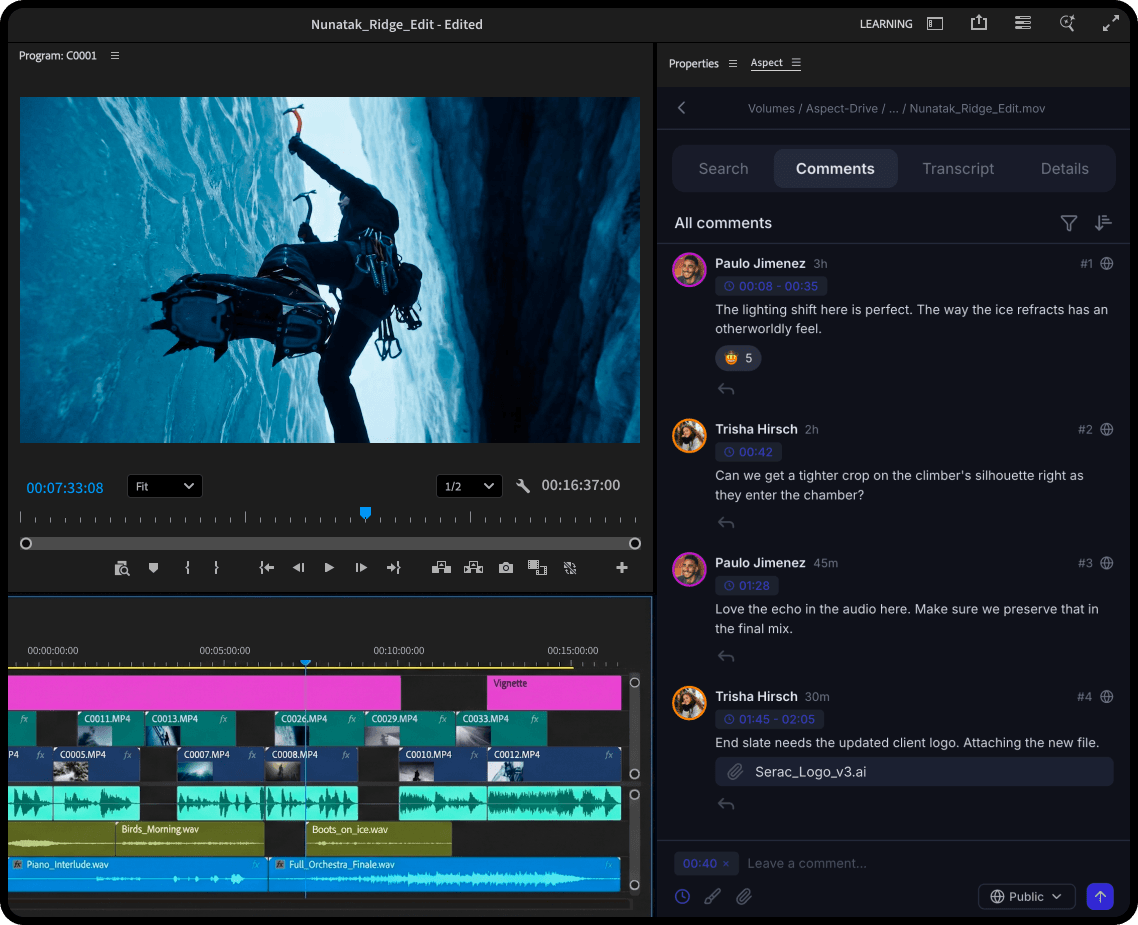
In corporate communications, the workflow is part of the message. A statement that goes out wrong, reaches the wrong audience, or can't be traced back to its approval is a governance failure before it becomes an operational one. Aspect gives communications teams the controls to move fast without losing accountability.- Every stakeholder reviews against the same version history: legal, leadership, brand, and outside counsel all in one thread
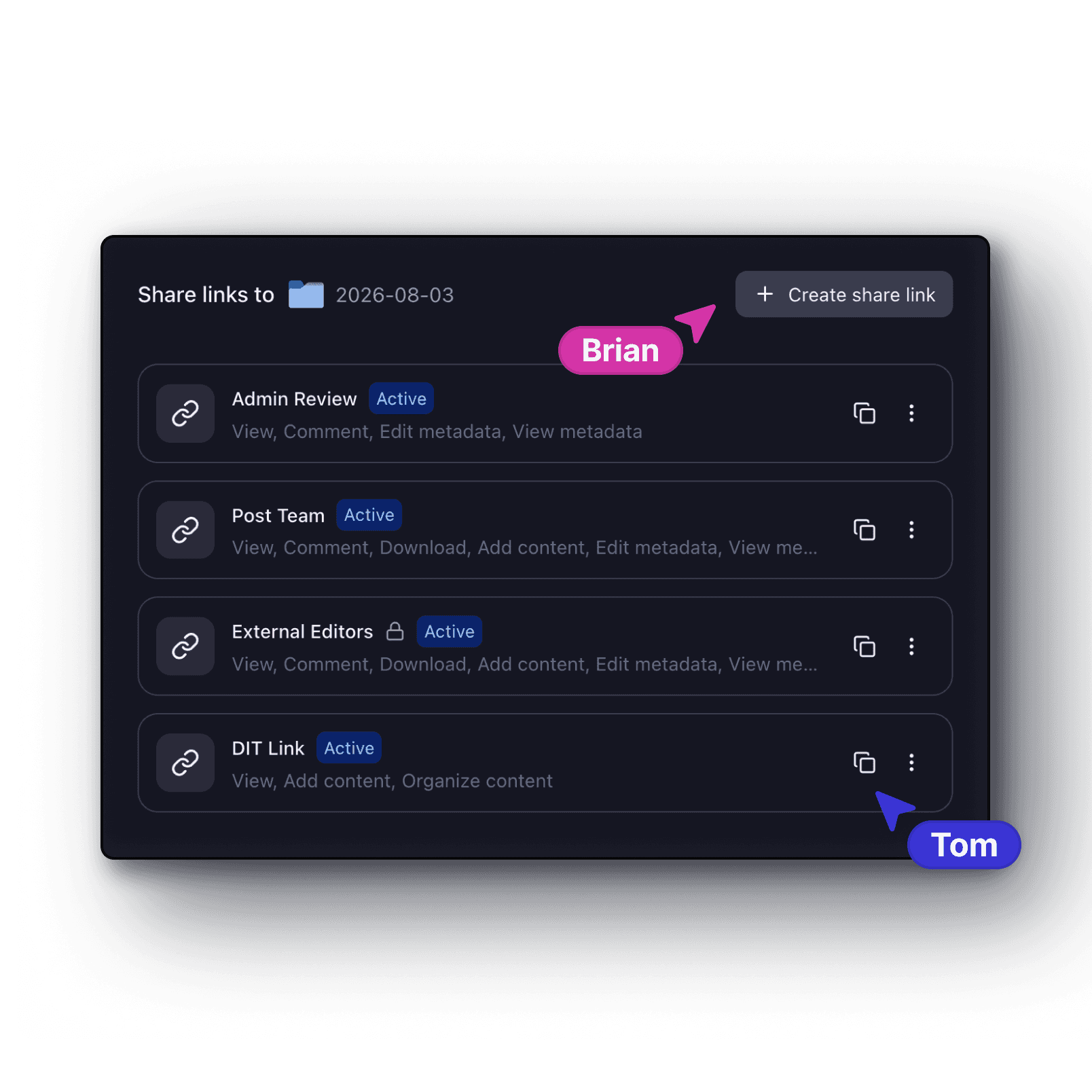
- Each audience gets exactly the access they need, with board members, employees, investors, and media scoped separately inside the same system
- Every access, approval, and change is on record
The Solution
Version-Aware Review and Approval
Corporate communications is one of the few environments where a version mistake carries legal and reputational consequences. During a crisis, the industry standard for a first public statement is under four hours. That window requires legal, PR, HR, and leadership to review and align on the same message in parallel. Frame-accurate comments, annotations, and version stacking keep every reviewer working against the same draft history, whether that's legal counsel, the CEO, the communications director, or external PR partners. Legal's edits are visible in context. Leadership's approval is attached to the exact version it was given for. The communications lead no longer has to reconstruct a timeline from memory the night before a board announcement or the morning of a product recall. Version stacking also solves the pre-approved template problem. Leading communications teams draft and legally pre-approve message templates for predictable crisis scenarios before a crisis ever happens. The challenge is keeping those templates versioned, findable, and recoverable in exactly the state they were approved. Stored in a shared drive, they get edited, renamed, and orphaned from their approval history. In Aspect, they stay connected to the version that was signed off on and recoverable to that state if anything changes.Scoped Permissions and Sharing
Corporate communications manages the same core message across audiences that cannot overlap. A press release, an internal employee memo, an investor briefing, and a regulatory filing can all stem from the same source material. Sharing the investor version with employees, or the internal memo with media, becomes a legal problem. Scoped permissions let the communications team distribute the right version to the right audience from the same system the message was reviewed in. Board members see the board materials. Employees see the internal update. Media contacts receive the press package. Outside counsel accesses the legal review draft. None of those audiences overlap, and none of that requires a separate delivery workflow or a manual export for each recipient group. For larger organizations managing communications across business units, geographies, or regulated industries, this is the capability that makes the workflow governable at scale.Audit Logging and Snapshots
The more sensitive the message, the more it matters to know exactly what happened to it. Audit logging keeps a timestamped record of every access, download, change, and approval across every asset in the system. When legal asks who reviewed the statement before it went out, the answer is already there. When a regulatory body asks for the approval trail on a disclosure, the log is ready. Snapshots go further. Before a major review round, a board announcement, or a final release window, the team can preserve a known-good state of every asset in the distribution package. If something changes in the last hour before publish, the team has a clean version to fall back to in seconds. For communications teams managing messages where a single word change can alter legal meaning, that recovery capability is part of the governance model.What Changes
| The Bottleneck | How Aspect Solves It | What Your Team Gains |
|---|---|---|
| Version-Aware Review: Legal, leadership, and PR feedback arrives through separate channels and gets reconciled manually before every revision under deadline pressure | Frame-accurate comments and version stacking keep every reviewer on the same draft | The communications lead stops reconciling feedback and starts publishing, which means faster approvals |
| Scoped Permissions: The same core message needs to reach board members, employees, investors, and media with different access rights and no audience overlap | Each stakeholder group is scoped to exactly what they need. Board materials, employee updates, press packages, and legal drafts are all distributed from the same source without overlapping | Distribution stays governed across every audience without a manual export or a separate delivery workflow for each one |
| Audit Logging and Snapshots: There's no reliable record of who accessed, changed, or approved a message before it went out, and no clean restore point if something changes at the last minute | Audit logging timestamps every access and approval automatically. Snapshots preserve known-good states before every major review round or release window | The team has a defensible approval trail before every announcement and a recovery path that takes seconds instead of hours |
Does Aspect Fit Your Communications Team?
Communications teams where Aspect makes the biggest difference usually recognize these patterns:- Messages require sign-off from legal, leadership, and communications before anything goes out, and that approval process currently runs through email, shared drives, and side channels
- The same core message needs to reach separate audiences (board, employees, investors, media, regulators) with different access rights and no overlap between them
- A version mistake carries legal or reputational consequences, not just operational inconvenience
- When legal or security asks for the approval trail on a sensitive communication, the answer currently lives in someone's inbox