The Problem
- Every project runs through too many tools. Source media lives in storage, review happens somewhere else, and delivery gets assembled in a third place. Every handoff is another chance for the wrong version to move forward.
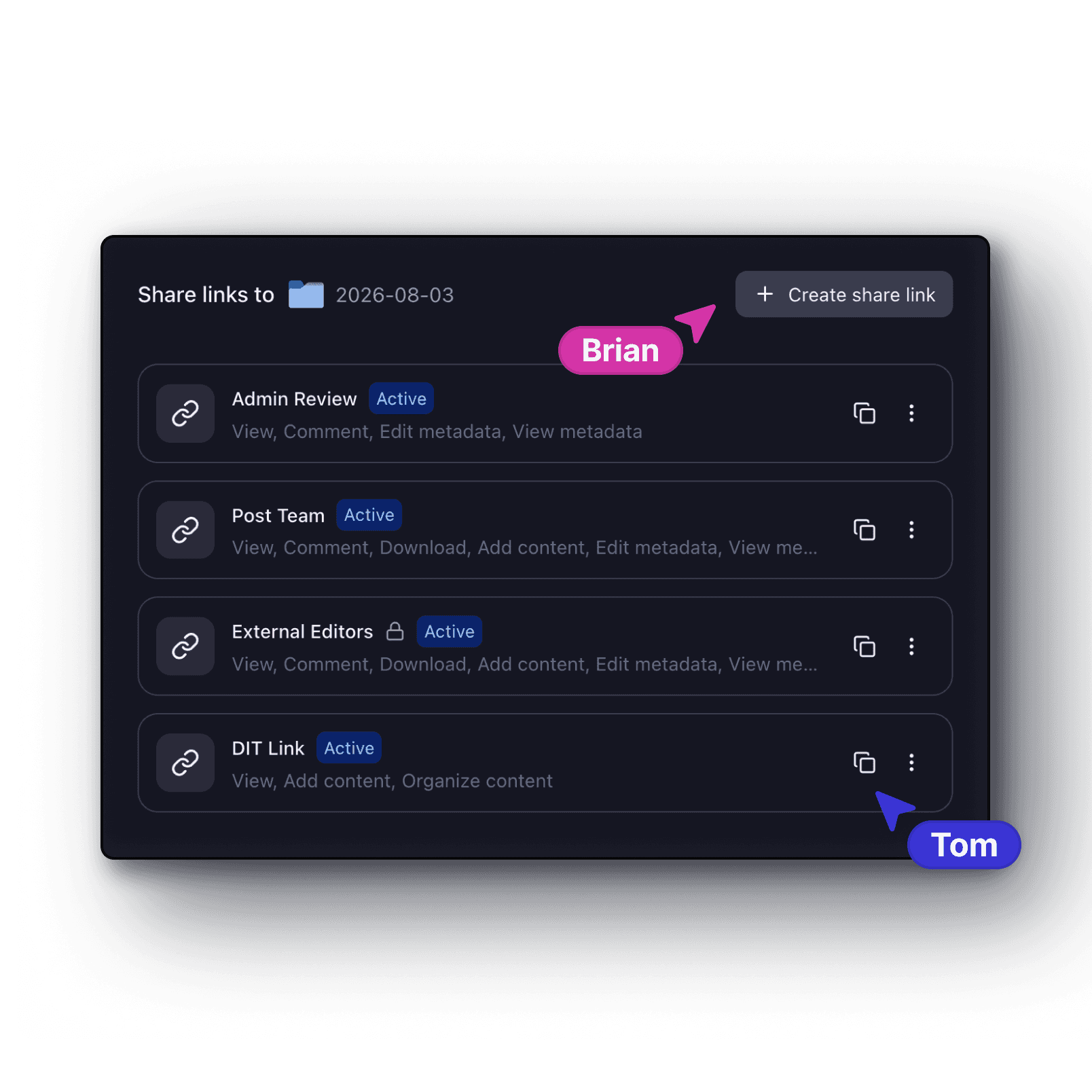
- Freelancers and clients never quite fit the workflow. Ad hoc invites, expiring links, and side-channel threads get the job done until someone opens the wrong file or the link expires.
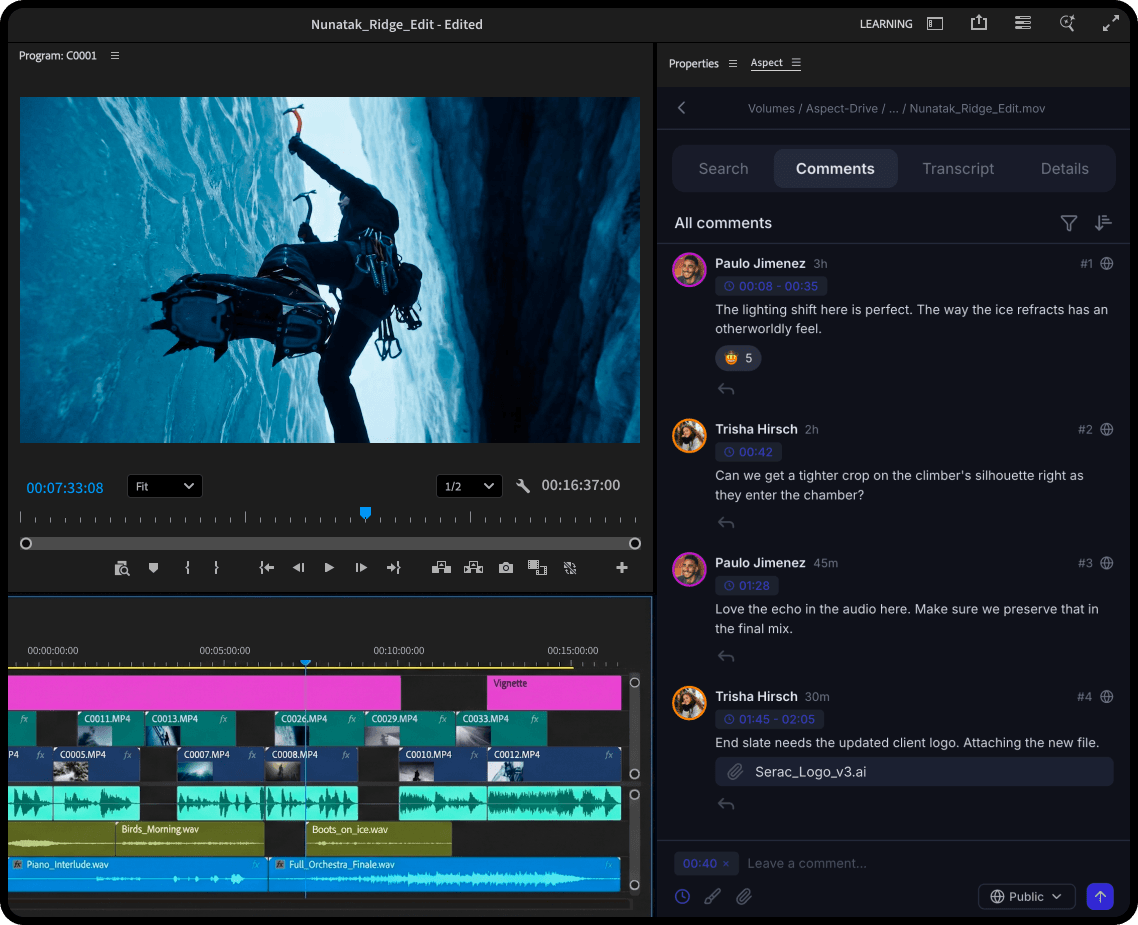
- Feedback ends up everywhere except on the frame. Notes arrive in Slack, email, and exported PDFs with no clear connection to the edit they were meant for. Someone has to piece all of it together before the next revision can start, and that someone is usually doing it off the clock.
- Delivery becomes its own project. Once a round is approved, producers rebuild the handoff from scratch: pulling selects, re-exporting files, and assembling a client presentation that should have been one click away.
What Aspect Does for Creative Agencies
Aspect replaces the patchwork of storage, review links, and manual delivery packaging with one system, so producers spend less time managing files and more time moving work forward.- Keep every client's work completely isolated. Scoped permissions mean editors never see each other's projects, even when they're working in the same system on the same day.
- Tie feedback directly to the frame it belongs to, eliminating the reconciliation work that turns revision rounds into non-billable hours.
- Turn the approved working set into the client delivery.
The Solution
Guest Collaborators and Permissions
Creative agencies are one of the few production environments where a single team simultaneously manages completely separate permission structures for dozens of active clients. An editor working on a pharmaceutical brand in the morning and a consumer goods campaign in the afternoon cannot have those clients see each other's work. Most platforms treat this as an edge case. For agencies, it is the baseline operating requirement on every project, every day. Guest access and scoped permissions let agencies bring freelancers, editors, retouchers, and clients into the same system, limited to exactly what they need. Each client sees their campaign. Each freelancer sees their deliverables. Internal teams see everything they're assigned to. The payoff grows over time. Instead of building a new access model for every client and every project, the agency builds it once per role and applies it everywhere. Onboarding a new freelancer takes minutes instead of a back-and-forth about which Dropbox folder to send them. Inviting a client to review takes one link instead of a manual export and a long email providing context that should already be visible.Comments, Markup, and Version Stacking
The average creative project goes through three to five revision rounds. When feedback arrives disconnected from the asset, whether in Slack, email, or a PDF, producers spend significant non-billable hours piecing notes together before a single change gets made. At an agency running twenty active projects, that work adds up fast. It becomes hours every week that the agency absorbs without billing for them. Frame-accurate comments and markup tie feedback directly to the asset it belongs to, on the exact frame and version. Version stacking keeps every round connected: V1, V2, V3, and final in one thread instead of a new folder, a new link, or a new Slack message asking which file is current. Reviewers see exactly what changed from one round to the next. Approval resets stop happening because nobody is confused about which version they're looking at. And when a client asks to go back to something from round two, the information is already there.Branded Delivery and Presentations
Agencies care about two things: the quality of the work and the quality of the experience around the work. A polished client presentation at delivery is part of the product, but most agencies are assembling that presentation manually after every approval round. The last thing the client sees before signing off is often the most chaotic part of the process: a raw download folder, a string of Dropbox links, or a WeTransfer that expires before the client's legal team has a chance to review it. Branded share links and presentation-style views turn the approved working set into a polished client-facing handoff without leaving the system the work was already reviewed in. The agency's brand is on the delivery. The assets are organized the way the client expects to receive them. That matters beyond the individual project. The way an agency packages and presents final work is part of how clients decide whether to come back. A delivery that feels considered and professional reinforces the value of the agency.What a Workflow with Aspect Unlocks
| The Bottleneck | How Aspect Solves It | What Your Team Gains |
|---|---|---|
| Guest Access and Permissions: Every new client and freelancer requires a new access model built from scratch, usually through ad hoc invites and shared folders | Scoped permissions give every collaborator exactly the access they need | Onboarding is repeatable, and access management stops being a producer's side job |
| Comments and Version Stacking: Feedback arrives in Slack, email, and PDFs with no connection to the asset, forcing producers to piece notes together before every revision round | Frame-accurate comments tie feedback to the exact frame and version | Revision rounds get shorter, non-billable hours drop, and file confusion stops derailing approval cycles |
| Branded Delivery: Client handoffs get rebuilt manually after every approval round, with raw folders, expiring links, and long covering emails that should be one click | Approved assets become the client presentation, branded, organized, and ready to share from the same system the work was reviewed in | The agency's final impression matches the quality of the work |
Does Aspect Fit Your Creative Agency?
Agencies that get the most from Aspect usually share a few of these patterns:- Producers spend time every week piecing together feedback from email, Slack, and PDFs before revisions can start, adding to non-billable hours
- The team manages multiple active clients simultaneously and needs those clients completely isolated from each other inside the same workflow
- Freelancers and outside collaborators are part of every project and currently get access through ad hoc invites, shared folders, or side-channel workarounds
- Client delivery is assembled manually after every approval round instead of flowing directly from the reviewed and approved working set