The Problem
- The weekly cycle resets before the last one wraps up. Sermon recordings, worship captures, live streams, and social clips all need to move from Sunday's service to Monday's distribution. Last week's content competes with next week's prep before anyone has had a chance to catch up.
- Volunteer teams use whatever tools they have. Personal Dropbox accounts, Google Drive, USB handoffs. Every new volunteer brings their own habits, and the workflow drifts a little further each time.
- Multi-campus organizations duplicate everything. Each location manages its own media with no shared system or naming conventions. The same sermon series exists in four different folder structures across four different drives, and nobody is confident which one has the approved version.
- Seasonal spikes bury teams that are already stretched. Easter, Christmas, VBS, and conferences multiply the production load with no scalable way to absorb it. The team that barely keeps up week to week gets buried when the calendar hits a peak.
What Aspect Does for Houses of Worship
Houses of worship are among the highest-volume media producers of any organization their size. They run a full production cycle every week with rotating volunteers, no dedicated IT, and a sermon archive that grows faster than anyone can organize it. Aspect gives worship media teams the tools to make that weekly cycle repeatable.- Volunteer editors start the edit the moment footage is uploaded, instead of waiting for downloads to finish
- The sermon library becomes searchable by topic, scripture, speaker, and series, so archive content is easy to find and share
- Each campus accesses exactly what it needs, including its own media and shared organization-wide assets
The Solution
Mounted Access and Streaming
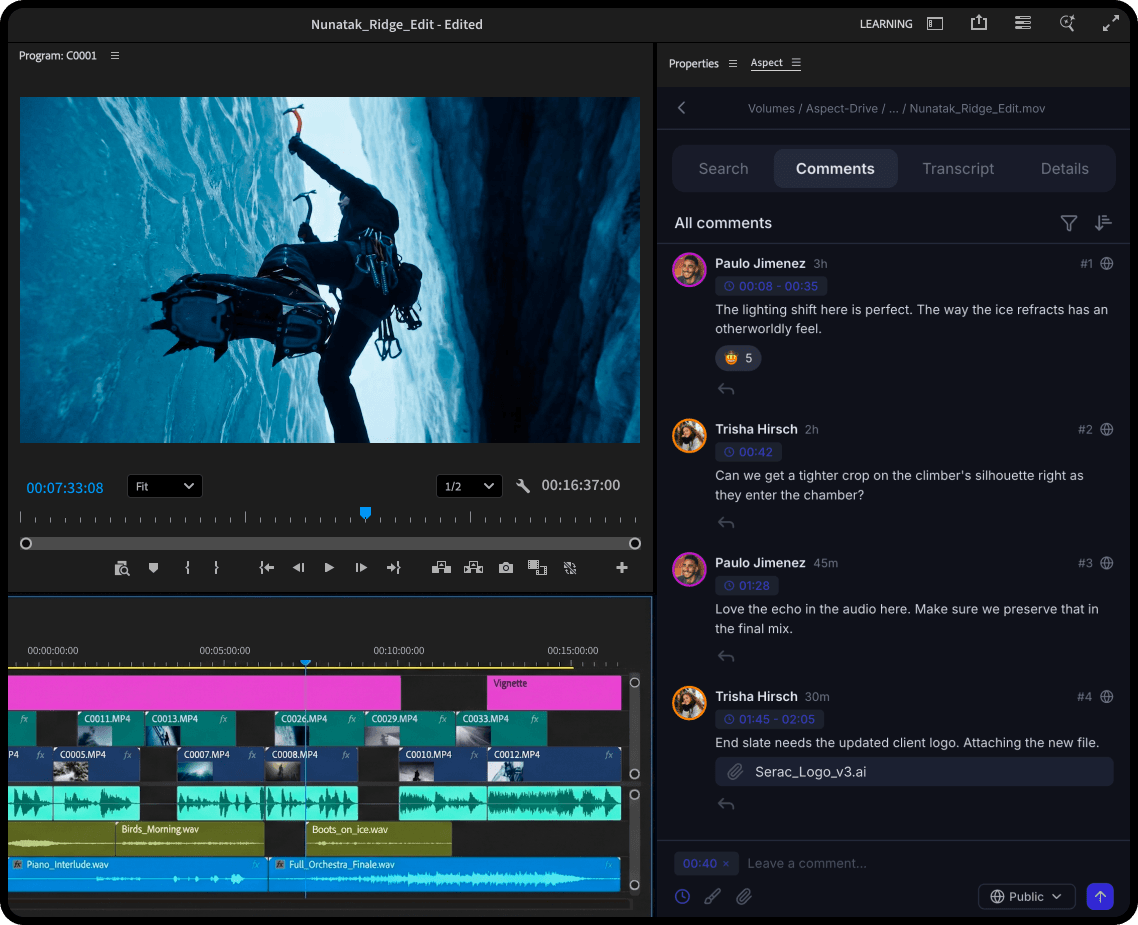
Volunteer editors lose hours every week before a single edit starts. Sunday's sermon is uploaded to a shared drive, then sits there waiting on a download to complete before anyone can open the project. For a team already racing to get content out before the week moves on, that wait compounds. Mounted access removes the download step entirely. The moment Sunday's recording is available, volunteer editors open it from a mounted drive and start editing. For organizations running volunteer teams with personal laptops and varying hardware specs, this matters beyond speed alone. Larger organizations like multi-site megachurches or international ministry networks running dozens of campuses also benefit here. Every campus editor mounts the same project from the same source. No duplicate libraries, no conflicting versions, no coordinator managing which campus has the latest file.Transcription and Semantic Search
Houses of worship produce something no other organization on this list produces at the same scale: a continuously growing library of spoken teaching organized around recurring themes, scripture references, and speakers. A church active for ten years has thousands of hours of sermon content covering every major topic in its theological tradition. The question is whether that content is findable or just stored. When sermon archives are unlabeled, the library is effectively unsearchable. Transcription runs automatically as content is processed, turning every sermon, teaching, and interview into a fully searchable text layer tied to the exact timecode. Semantic search goes further, letting teams describe what they are looking for in plain language rather than exact phrases. For large ministry networks like multi-site churches, denominational media teams, or international organizations managing content across dozens of locations, this turns the sermon archive from a storage cost into a content resource that gets more valuable the longer the organization uses it.Permissions and Multi-Campus Access
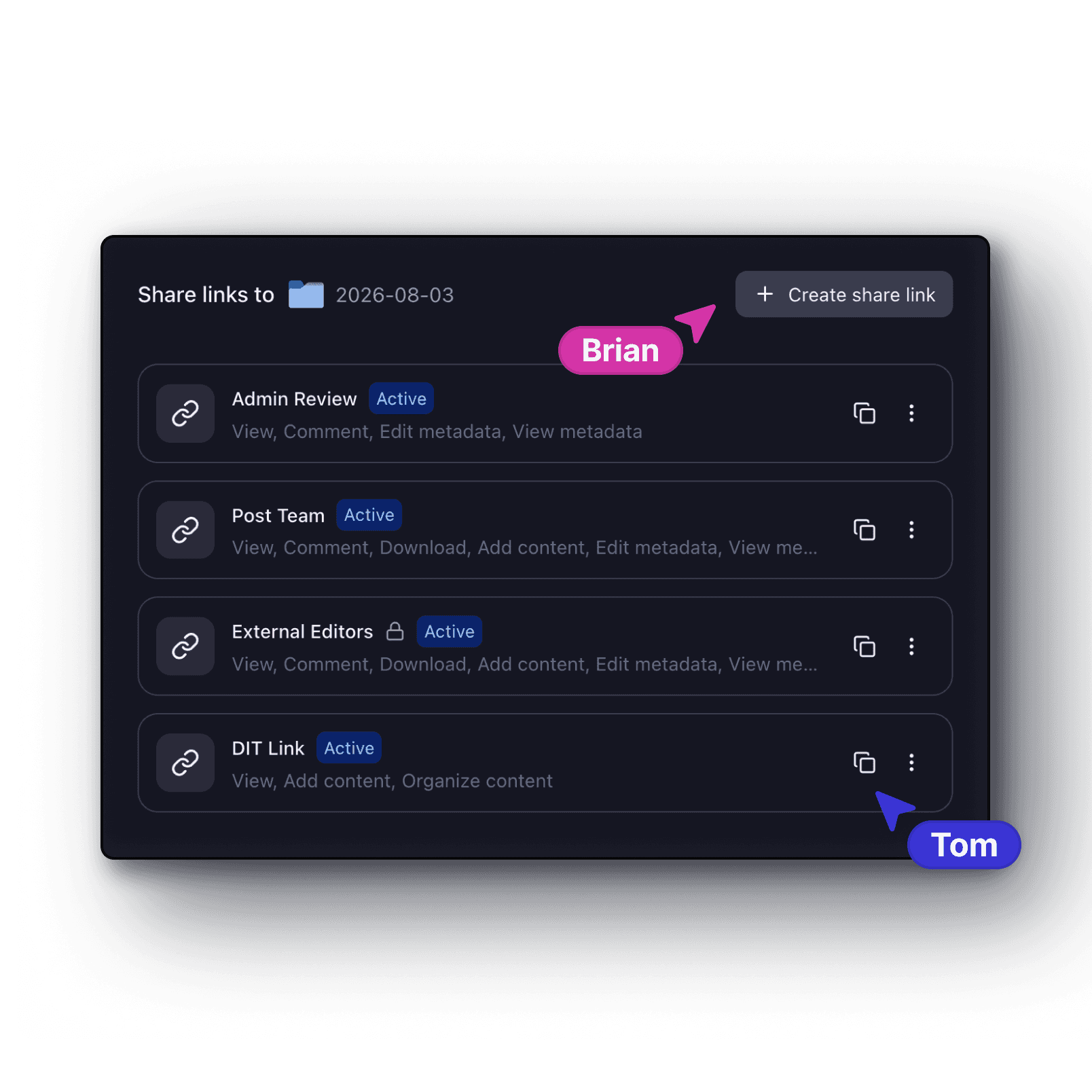
Large houses of worship face a media management problem that most platforms are not built for. A megachurch with fifteen campuses needs each campus to access its own recordings, worship captures, and event footage. At the same time, the organization needs shared assets to flow across every location without each campus maintaining its own copy. Most organizations solve this with a patchwork of shared drives, forwarded links, and informal agreements about which folder belongs to which campus. Granular permissions and scoped access let each campus operate independently inside the same system. Organization-wide assets are accessible to every campus without being editable by any of them. When a new campus is onboarded, access is configured once and applied immediately. When a volunteer leaves, their access is removed in one step instead of across five different shared drives.What a Workflow with Aspect Unlocks
| The Bottleneck | How Aspect Solves It | What the Team Gains |
|---|---|---|
| Mounted Access: Volunteer editors wait on full downloads before they can open Sunday's sermon | Mount and start editing the moment content is uploaded | The weekly cycle starts on Sunday and content reaches the congregation while the message is still fresh |
| Transcription and Semantic Search: Sermon archives accumulate as unlabeled recordings organized only by date, making years of teaching effectively unsearchable | Every sermon is transcribed automatically and searchable by topic, scripture, speaker, and series across the full library | The archive becomes a usable content resource that can be pulled and shared easily, reducing the time workers or volunteers spend on it |
| Permissions and Multi-Campus Access: Each campus manages its own media independently, duplicating the library and drifting further from the organization's shared identity | Each campus accesses its own media through scoped permissions while shared assets flow to every location automatically | Campuses stay independent where they need to be and connected where it matters |
Does Aspect Fit Your House of Worship?
If any of the following sounds familiar, Aspect was built for teams like yours:- The organization runs multiple campuses or services and each location currently manages its own media independently with no shared system
- Editors wait on downloads before they can start editing, and the weekly content cycle regularly slips because of it
- The sermon archive is growing faster than anyone can organize it, and finding a specific teaching from two years ago takes longer than it should